



Google’s product carousels are disappearing in Europe. Here’s what to do.
Under the Digital Markets Act, a new comparison sites unit is replacing organic product carousels across the EEA. What changed, who it affects and how to stay visible.


- Organic product carousels have largely disappeared from Google search in the EEA.
- A new unit now sends shoppers to comparison services first, Google Shopping among them.
- Being listed on comparison sites is now part of staying visible in European search.
What changed
For years, a search for a product on Google showed a carousel of “popular products”: images, prices and stores, one click away from a product page. In September 2026, that carousel largely vanished from search results across the European Economic Area.
- DEFINITION Comparison Shopping Service (CSS)
- A comparison site that lists products from many stores. In Google Shopping, CSS partners can place merchants’ products in Shopping results on their behalf.
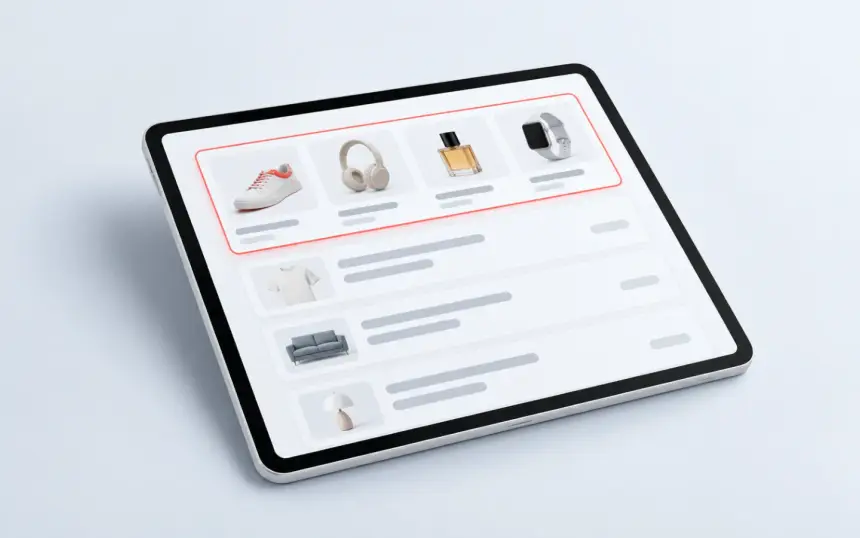
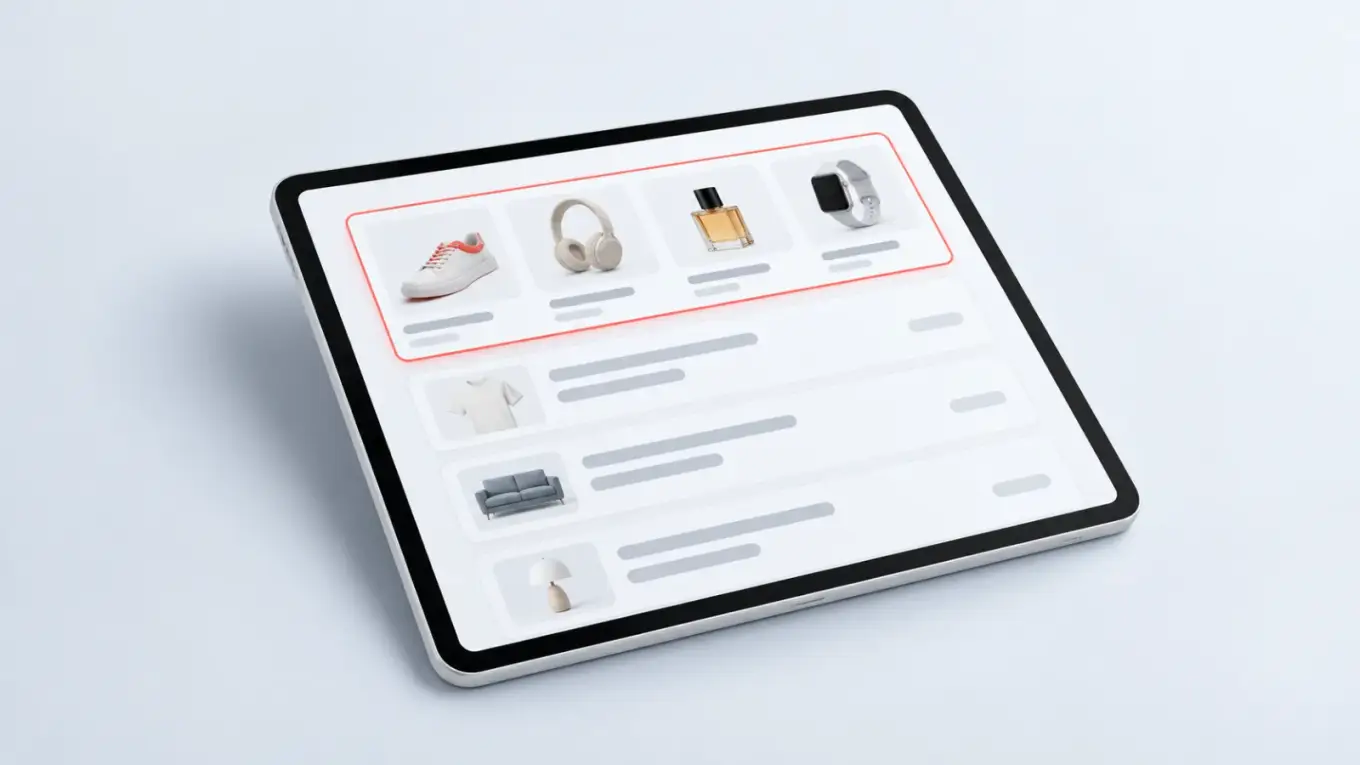
In its place sits a new unit of comparison shopping services, which Google calls the aggregator unit. It lists several services, each in its own row, with one expanded by default. In a SISTRIX study of seven EU countries, the most frequent of them was Google Shopping, and in Germany the unit’s heading read “Vergleichsportale” or named the product category. Clicking a product takes the shopper to that service first, a comparison site or google.com/shopping, and from there to a store.
| Before | Now · EEA | |
|---|---|---|
| What shoppers see | Product carousel | Comparison sites unit |
| First click goes to | A Google product view or the store | The comparison site, or google.com/shopping in Google’s row |
| Source of the listing | Google’s Shopping Graph | Product data from each service, Google Shopping included |
| How to be visible | Merchant Center feed | Be listed on comparison sites, including Google Shopping through Merchant Center |
Why it’s happening
The change follows the EU’s Digital Markets Act, which bars large platforms from favouring their own services. In July 2026 the European Commission fined Google for giving its own shopping results more prominence than third-party comparison services. Google’s redesign of EEA search results, rolled out in September, is its response.
It is the latest step in a long story. In 2017 the Commission fined Google 2,42 billion € for favouring its own comparison shopping service, which led to the CSS programme for Shopping ads. Google was designated a DMA gatekeeper in September 2023, the Commission opened a non-compliance investigation in March 2024 and sent preliminary findings in March 2025. On 23 July 2026 it fined Google 460 million € for self-preferencing in Search.
Comparison services are no longer a side channel in Europe. They now sit where Google’s product carousel used to be.
Who it affects
Any merchant that relied on organic product visibility in Germany, France, Spain, Italy, the Netherlands, Belgium, the Nordics or any other EEA market. The UK and Switzerland are outside the EEA and, for now, unaffected.
- Spain (EEA · affected)
- Portugal (EEA · affected)
- France (EEA · affected)
- Italy (EEA · affected)
- Germany (EEA · affected)
- Austria (EEA · affected)
- Belgium (EEA · affected)
- Netherlands (EEA · affected)
- Denmark (EEA · affected)
- Sweden (EEA · affected)
- Finland (EEA · affected)
- Poland (EEA · affected)
- United Kingdom (Outside the EEA · unaffected for now)
- Switzerland (Outside the EEA · unaffected for now)
If you sell in the EEA, your organic product visibility now runs through comparison sites.

What it means for Shopping ads
The change concerns organic product results. Paid Shopping ads keep running through Merchant Center and the CSS programme, where independent comparison services already compete with Google Shopping in the same auction. Ads placed through an independent CSS let the full bid enter the auction, an advantage commonly cited at up to 20%.
What does change is the page around those ads. With the organic carousel gone, the comparison sites unit and the ads compete for the shopper’s attention in the space where product results used to be.
How to measure the impact
| Metric | Where to find it | What to look for |
|---|---|---|
| Organic product clicks | Merchant Center performance, free listings | A drop from mid-September in EEA markets |
| Clicks by market | Merchant Center, filtered by country | Which markets lost the most |
| Referral traffic | Your analytics, by source | New visits from comparison sites |
| Shopping ads share | Google Ads impression share | Changes in competition for paid placements |
Compare each EEA market with the UK or Switzerland if you sell there. Both are outside the EEA, so they give you a useful control group for the same weeks.
What to do now
- Watch your EEA organic clicks. Compare Merchant Center performance before and after mid-September, market by market.
- Get listed on comparison sites. They are now the way into the space carousels used to fill.
- Keep your product data clean. Accurate titles, prices and stock matter more when shoppers compare one click deeper.
Quick answers
Does this affect Google Shopping ads?
This change concerns organic product results. Paid Shopping ads keep running through Merchant Center and CSS partners. In July 2026 the Commission said it was also assessing changes to how Google shows Shopping ads, which Google had proposed and begun testing.
Is the UK affected?
No. The UK and Switzerland are outside the EEA, so search results there are unchanged for now.
How do I get into Google’s comparison sites unit?
By being listed on comparison sites that appear in it. Listing on Komparoo’s native sites is free.
Will the carousel come back?
Not in its old form while the DMA rules apply. Google may keep adjusting the layout as the Commission assesses its compliance.
Do I need to change my Merchant Center setup?
No. Your feed still powers Shopping ads, and comparison sites can use the same product data.
Get the next shift in European e-commerce before it hits your numbers.
One email a month on Google Shopping, comparison sites and AI search. No spam.
Controller: Komparoo. Purpose: sending our newsletter. You can unsubscribe or exercise your rights at any time. More in our privacy policy.
Sources: European Commission (DMA decisions of 23 July 2026, press release IP/26/1670), European Commission (press release IP/17/1784), Google Search Central (aggregator unit), SISTRIX (study of Google’s comparison sites unit in the EU, 14 October 2026), Productrise (product carousel tracking in the EEA, September 2026), Google Merchant Center Help (Comparison Shopping Services).