



























Product identifiers for EU e-commerce imports are now mandatory
Since 1 November 2026, EU customs needs product identifiers for distance sales of imported goods. What they are, who provides them and what your feed already holds.

- Since 1 November 2026, customs declarations for distance sales of imported goods to EU consumers must include product identifiers.
- Each product needs the seller’s or platform’s reference and the manufacturer’s, plus an EAN or other standard code, or Y081 if none exists.
- Per the Commission’s guidance, the rule covers consignments up to 150 €. Sellers, platforms and manufacturers supply the data; the declarant files it.
- If you use a product feed, it likely holds much of the data. Ask suppliers for missing manufacturer references and agree how they reach the declarant.
Since 1 November, EU customs asks for up to three product identifiers
Since 1 November 2026, customs declarations for distance sales of imported goods to EU consumers must include product identifiers, the European Commission says. Its guidance applies this to consignments with an intrinsic value of up to 150 €. From 1 July, providing them was voluntary and carried no penalties; effective enforcement started on 1 November.
Two identifiers are always required, and a third where one exists:
| Identifier | What it is | Assigned by | Declared (code) |
|---|---|---|---|
| Merchant (M-PID) | The product’s reference on the seller’s site, marketplace or platform | The online seller, marketplace or platform | Always (C127) |
| Manufacturer (NS-PID) | The manufacturer’s own reference, such as a model, part or style number | The manufacturer, producer or supplier | Always (C128) |
| Standardised (S-PID) | An international standard code: in Europe, usually an EAN or, for books, an ISBN | The manufacturer, producer or supplier, optionally | If one exists (C129); if not, code Y081 |
According to the Commission, the aim is to help customs detect non-compliant and dangerous products more effectively and at scale. If one product proves non-compliant or dangerous, customs can extend that result to all products presenting a similar risk.
On 1 November, the EU also began applying its 2 € Union handling fee per item, set by Commission Delegated Regulation (EU) 2026/2152.
Which parcels and sellers the requirement covers
According to the Commission’s guidance, the requirement covers distance sales of goods that are outside the EU when sold, in consignments with an intrinsic value of up to 150 €. That is the price of the goods, without transport and insurance costs shown separately on the invoice. The seller ships the goods, or has them shipped, to a customer in a Member State: usually a consumer, sometimes a business or public body whose purchases from other EU countries are not subject to VAT.
Distance sale of goods outside the EU to an EU consumer?
- Yes
Is the consignment’s intrinsic value 150 € or less?
- Yes
Declare M-PID and NS-PID, plus S-PID or Y081 Mandatory since 1 November 2026, for each product in the declaration.
- No
Outside this requirement, per the guidance The 2 € handling fee per item still applies to distance sales.
- Yes
- No
Check your case with your customs agent According to the guidance, B2B flows are in principle not concerned.
Per the guidance of 5 October 2026, the legal text didn’t yet set the 150 € limit and the Commission was amending it. The guidance is not binding.
Source: European Commission guidance, version of 5 October 2026
What counts is where the goods are at the time of the sale. The requirement therefore covers, for example, shops shipping from Great Britain or Switzerland to EU consumers, and EU shops selling goods held in warehouses or by suppliers outside the EU. If the customer collects the goods or arranges the transport without the seller’s involvement, it is not a distance sale. Three parties share the work:
- Seller or platform. Implicitly responsible for providing the M-PID so it reaches customs. On a marketplace, the platform sets it, not each seller.
- Manufacturer, producer or supplier. Implicitly responsible for passing the NS-PID and any S-PID along the whole supply chain.
- Declarant. Required to provide the identifiers to customs.
For distance sales up to 150 €, the guidance says the declarant will in most cases be the IOSS (Import One-Stop Shop) holder, the special arrangements operator, their indirect customs representative or the importer’s. As a residual category, it can be any person able to present the goods to customs.
How customs identifiers match your product feed
If you advertise through Shopping ads or comparison sites, your product feed probably holds most of these identifiers. The Commission says that in most cases they already exist in the supply chain, for example in product listings, on invoices or on packaging. The match below is our own guidance, not an official equivalence:
| Identifier | Customs rule | Nearest in your feed (our guidance) |
|---|---|---|
| M-PID | Always; expected to be customer-facing and, on a marketplace, set by the platform | The reference on your product page, often your feed’s id or SKU |
| NS-PID | Always, even if your feed has no mpn | mpn, or the manufacturer’s model or style number |
| S-PID | Only if one exists | gtin, which takes UPC, EAN, JAN, ISBN and ITF-14 numbers |
| Y081 | Only says the product has no standard code | A product with no GTIN or other standard code assigned, not just a blank gtin in your feed |
Don’t confuse Y081 with identifier_exists. In Google Merchant Center, setting it to no says the product has no GTIN, MPN or brand at all; Y081 only says there is no standard code. In both cases, customs still needs an NS-PID: if a product has none, the guidance expects the manufacturer, producer or supplier to assign one.
Like a feed id, each identifier should point to a single variant. The guidance treats deliberately declaring identifiers per batch or per unit, where one exists at model level, as an infringement. Accuracy matters too: Google says to give an mpn only if you’re sure it’s correct.
Bundles, second-hand goods and products without a barcode
In general, the guidance says, each identifier refers to exactly one product variant, with the same brand, size, colour, packaging and so on. It stays unchanged at least from manufacture to sale and delivery. The guidance’s examples cover the trickiest cases:
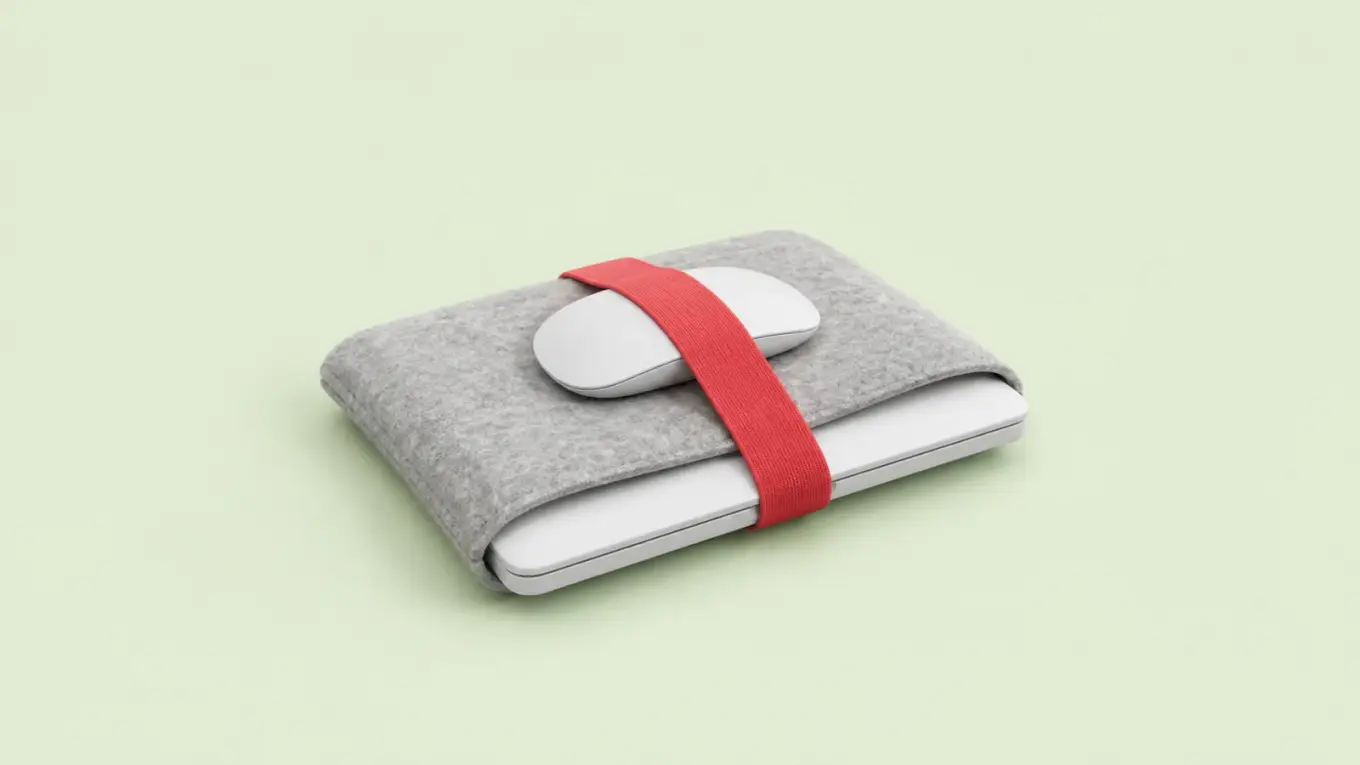
- Bundles. Declare each product’s identifiers, as in the guidance’s example: a laptop sold with a sleeve and a wireless mouse. Use Y081 only if none has an S-PID.
- No barcode. Manufacturers don’t have to assign an S-PID to every product. Without one, declare Y081; the M-PID and NS-PID are still required.
- Second-hand and refurbished. They must comply too, with no special treatment: give the original product’s identifiers.
- Personalised and print-on-demand. The same applies. For a textile personalised with a logo or a name, give the base textile’s identifiers.
- Special characters. Each national customs system decides which it accepts. Others can be replaced by the nearest equivalent it does accept.
The guidance gives an administrative tolerance to a few categories: unprocessed agricultural and perishable goods, handmade and artisanal goods, and antiques, collectibles, art, stamps and coins. Under the commodity codes the guidance lists, a non-exhaustive list, these goods are deemed compliant if declared with the conventional values “M-PID” and “NS-PID”. Medical devices and medicines have their own rules for the S-PID.
What to check before your next EU shipment
These are our recommendations, not legal requirements or customs advice:
- Collect each product’s identifiers. For each product you ship to EU consumers from outside the EU, note your reference, the manufacturer’s and any standard code.
- Ask suppliers for what’s missing. The manufacturer or supplier assigns the NS-PID and is expected to pass it on. If your catalogue lacks it, ask for it.
- Find out who declares. Ask your carrier, marketplace or customs agent who declares your parcels and how the identifiers should reach them.
- Map your references. Make sure customs gets the reference customers see on your product page. Map it to your feed id instead of changing the id, which Google advises against.
- Check variants and accuracy. Give one identifier per variant, not per batch or unit, and check bundles and products without a standard code against the cases above.

What comes next: 2028 and the EU Customs Data Hub
According to the guidance, the identifiers are a first step: more comprehensive product data requirements will follow once the EU Customs Data Hub for e-commerce is deployed, planned from July 2028. By 1 December 2027, the Commission must assess whether the Data Hub will realistically be operational by 1 July 2028.
The temporary 3 € customs duty per item in consignments up to 150 €, in force since 1 July 2026, is also due to apply until 1 July 2028. If the Data Hub isn’t operational by then, the Commission may propose extending the duty. The guidance itself will be updated for the new Union Customs Code, Regulation (EU) 2026/2108, under which new roles and responsibilities will apply.
Since 1 November, EU customs wants to know exactly what each low-value distance sale contains, and most of the answer is in your product data.
Quick answers
Which product identifiers must EU customs declarations now include?
Since 1 November 2026, customs declarations for distance sales of imported goods to EU consumers must give each product’s merchant identifier (M-PID) and manufacturer’s reference (NS-PID), the European Commission says. An EAN or other standard code (S-PID) is added if one exists; if not, code Y081 instead.
Does the EU product identifier requirement apply above 150 €?
Not according to the Commission’s non-binding guidance: it covers consignments with an intrinsic value of up to 150 €. As of its 5 October 2026 version, the legal text did not yet state this limit and was being amended. Above 150 €, distance sales still pay the 2 € Union handling fee per item.
Does the EU product identifier rule apply to UK and Swiss online shops?
Yes, when they ship goods from Great Britain or Switzerland to EU consumers. Per the Commission’s guidance, the requirement covers distance sales of goods that are outside the EU when sold, in consignments up to 150 €.
Which product feed attributes match the customs identifiers?
In Komparoo’s guidance, not an official equivalence, the S-PID is closest to the feed’s gtin and the NS-PID to the mpn or model number. The M-PID is usually your product page reference, often the feed’s id; on a marketplace, the platform’s. A product with no standard code assigned gets Y081 but still needs an NS-PID.
Who provides product identifiers to EU customs?
Per the Commission’s guidance, the declarant gives the identifiers to customs: in most cases the IOSS holder, the special arrangements operator or an indirect customs representative. The seller or platform assigns the M-PID, and the manufacturer or supplier the NS-PID and any S-PID.
Is the EU product identifier requirement enforced yet?
Yes: effective enforcement started on 1 November 2026, after a voluntary period without penalties from 1 July 2026. The guidance treats deliberately declaring identifiers per batch or per unit, where one exists at model level, as an infringement.
Get the next shift in European e-commerce before it hits your numbers.
One email a month on Google Shopping, comparison sites and AI search. No spam.
Controller: Komparoo. Purpose: sending our newsletter. You can unsubscribe or exercise your rights at any time. More in our privacy policy.
Sources: European Commission, DG TAXUD (news: Product identifiers for e-commerce imports mandatory from 1 November 2026, 3 November 2026), European Commission, DG TAXUD (guidance «The temporary EUR 3 customs duty and the Union handling fee – Guidance for Member States and Trade», version of 5 October 2026), European Commission (E-commerce: product compliance and safety), European Commission (EU customs reform), Commission Delegated Regulation (EU) 2026/2152 (Union handling fee), Google Merchant Center Help (GTIN [gtin]), Google Merchant Center Help (MPN [mpn]), Google Merchant Center Help (ID [id]), Google Merchant Center Help (Identifier exists [identifier_exists]), Komparoo. The mapping of customs product identifiers to product feed attributes is our guidance, not an official equivalence.