



Expanding into a new European market without a local team
Language, local search and comparison habits: what changes when you launch in a new country, and how to test it without hiring first.

- 78% of EU internet users bought online in 2025, but the share ranges from 57% to 95% by country.
- The basics are language, delivery, payment and a local feed.
- Performance channels let you test demand before investing in a team.
What changes from one market to the next
Selling in a new European country is not just a translation. Shoppers use different search terms, trust different stores and expect different delivery and payment options. What works in Spain may need adjusting in Germany or Sweden.
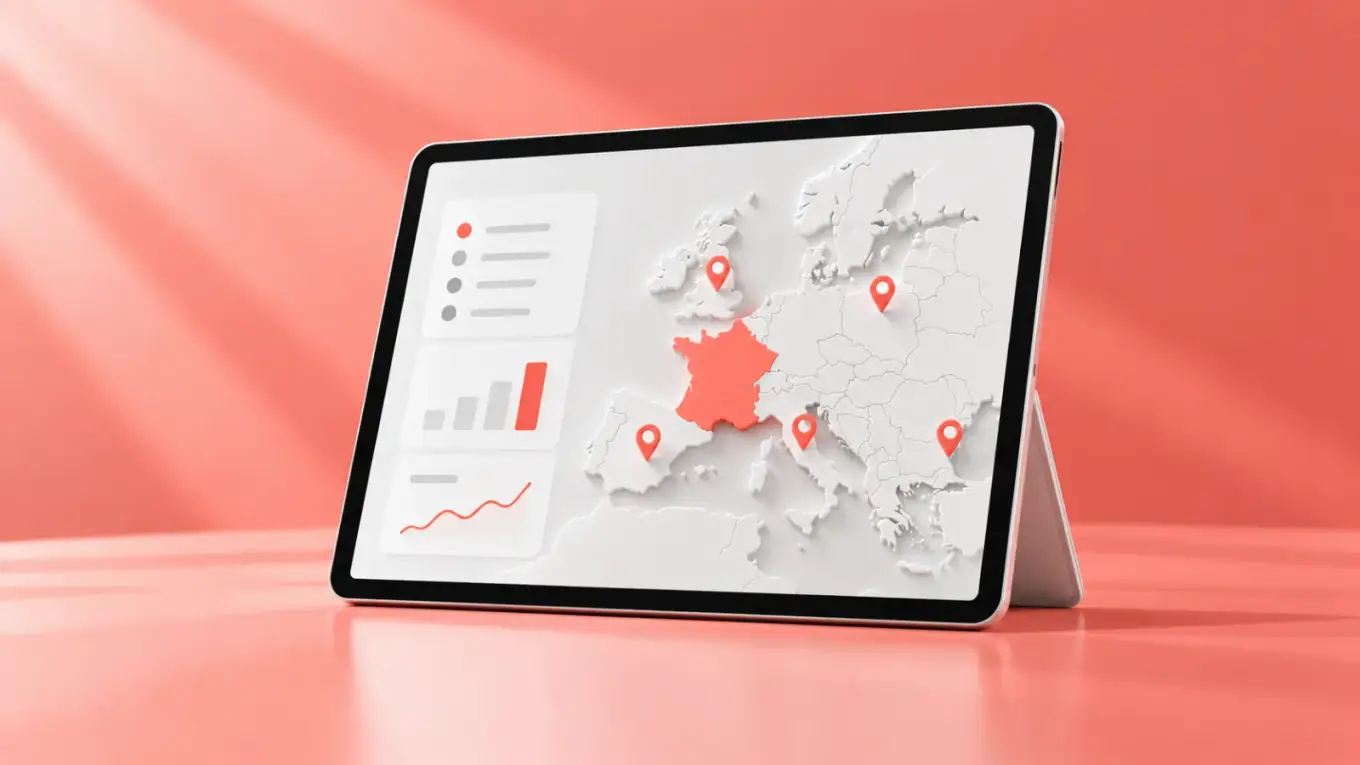
According to Eurostat, Ireland and the Netherlands lead online shopping in the EU, and some eastern and southern markets still have more room to grow. A high share means more competition but mature habits. A lower share can mean less competition and faster growth.
| What to check | Why it matters | |
|---|---|---|
| Language | Product titles and descriptions | Shoppers search in their own words |
| Delivery | Times, costs and returns | Compared as closely as price |
| Payment | Local methods | Missing options lose orders at checkout |
| Comparison habits | Which sites shoppers use | Where purchase decisions are made |
Local payment methods
Cards work almost everywhere, but many shoppers prefer a local method. Missing it is one of the most common reasons for abandoned checkouts in a new market.
| Market | Popular local methods |
|---|---|
| Netherlands | iDEAL |
| Belgium | Bancontact |
| Poland | BLIK, fast bank transfers |
| Germany, Austria | Invoice and pay later, PayPal |
| Nordics | Swish (Sweden), MobilePay (Denmark, Finland), pay later |
| Spain, Portugal | Bizum (Spain), MB WAY (Portugal), cards |
Get the basics right
- Localise your feed. Translate titles and descriptions properly, and use local units and currency.
- Set clear delivery terms. Show delivery times and costs for that market.
- Offer local payment methods. Check which methods shoppers in that country expect.
- Translate the essentials. Checkout, delivery, returns and customer service pages first.
- Check the legal basics. Consumer rights, returns and price display follow EU rules, with some local differences.
Test demand before you hire
You don’t need a local team to find out whether a market works. Performance channels let you put your products in front of local shoppers and measure real sales. With a CPA model, the test only costs you when it sells.
| Week | Goal | What to watch |
|---|---|---|
| 1–2 | Go live with a localised feed | Disapprovals, delivery and payment issues |
| 3–4 | First sales | Conversion rate and top categories |
| 5–8 | Stable results | Cost per sale, returns, average order value |
| After 8 | Decide | Scale, adjust or pause |
Choosing your next market
- Proximity. Markets that share a language or border are faster to learn.
- Logistics. Delivery times and costs from your warehouse.
- Demand. Search volume for your categories in that language.
- Competition. How many local stores already sell what you sell.
Use local comparison sites
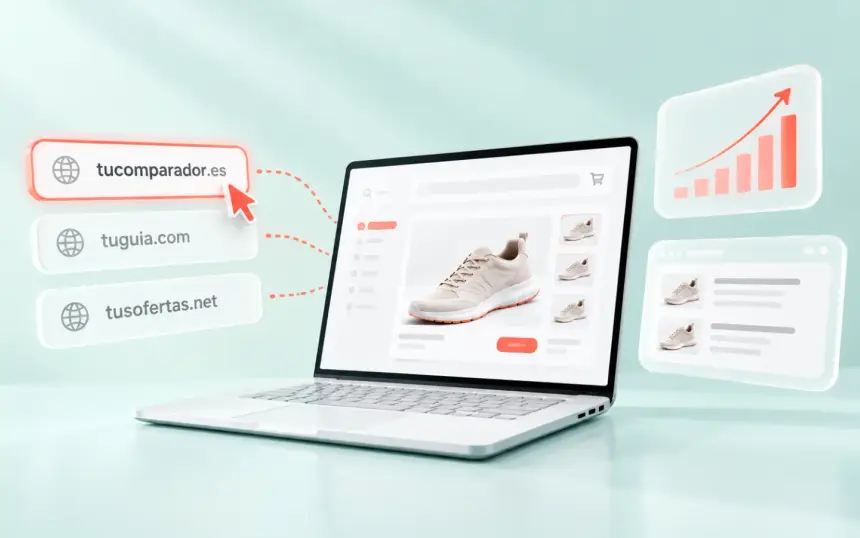
In many European markets, shoppers compare before they buy. Being listed on native comparison sites puts your catalogue where those decisions happen, in the local language, from day one.
Delivery and returns expectations
Across the EU, consumers have a 14-day right to withdraw from most online purchases. Many shoppers expect more: longer return windows and free returns are common in fashion. Check what local competitors offer, because shoppers compare returns policies as well as prices.
- State delivery times in days, not “fast delivery”.
- Show delivery costs before checkout.
- Offer local pickup points where they are popular.
- Make the returns process clear in the local language.
Translation that sells
- Use native speakers to review at least titles, checkout and key pages.
- Localise units and sizes: EU shoe sizes, metric measurements, local clothing size charts.
- Use local formats: 1.299,00 € in Spain and Germany, 1 299,00 € in France.
- Check search terms: the right word is the one shoppers search for, not the dictionary translation.
Launch checklist
| Area | Ready when |
|---|---|
| Feed | Titles, descriptions and prices localised, no disapprovals |
| Checkout | Local payment methods live and tested |
| Delivery | Times and costs shown for the market |
| Returns | Policy translated and easy to find |
| Support | Contact options and response times clear |
| Tracking | Sales attributed per market from day one |
VAT and pricing
Since July 2021, an EU-wide threshold of 10.000€ a year applies to cross-border sales to consumers by sellers based in a single EU country. Above it, you charge the VAT rate of the shopper’s country. The One Stop Shop (OSS) lets you declare that VAT for all EU countries in a single return.
VAT rates differ by country, so the same net price leads to different consumer prices. Decide whether you keep the same price everywhere and absorb the difference, or set prices per market.
The first 90 days
| Period | Focus |
|---|---|
| Days 1–30 | Fix technical issues, check delivery and payments, get first sales |
| Days 31–60 | Improve titles and prices for the top categories |
| Days 61–90 | Compare cost per sale and returns with your home market, then decide |
Test a market with real sales before you build a team for it.
Quick answers
Which market should I start with?
One close to your current markets in language, delivery and price, so you can learn quickly.
Do I need a local website?
A localised checkout helps, but many merchants start with their existing store and local delivery terms.
How long does a test take?
Plan for at least eight weeks of live traffic to read stable results.
Do I need to translate my whole site?
Start with product data, checkout, delivery and returns. Those pages decide the sale.
What about VAT?
EU rules for distance sales apply, and the OSS scheme lets you declare VAT for several countries in one place. Check with your advisor.
Get the next shift in European e-commerce before it hits your numbers.
One email a month on Google Shopping, comparison sites and AI search. No spam.
Controller: Komparoo. Purpose: sending our newsletter. You can unsubscribe or exercise your rights at any time. More in our privacy policy.
Sources: Eurostat (E-commerce statistics for individuals, 2025), European Commission (VAT One Stop Shop), Your Europe (returns and the right of withdrawal).