



GEO for e-commerce: getting your products into AI answers
AI assistants now recommend products. What makes an offer readable, trustworthy and worth citing, and what you can do about it today.


- One in three people in the EU used generative AI tools in 2025.
- Assistants favour offers with complete, consistent and verifiable product data.
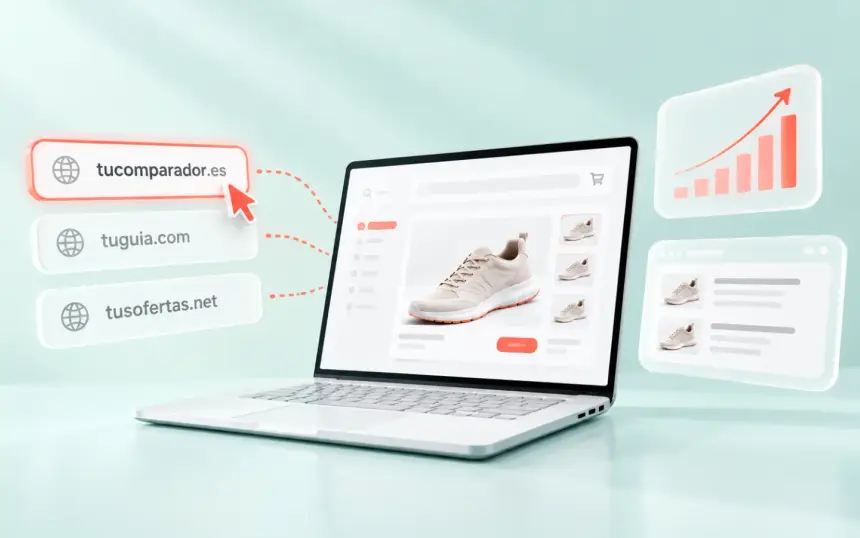
- Being listed on trusted comparison sites gives assistants more sources that mention you.
What GEO means
- DEFINITION Generative Engine Optimisation (GEO)
- The practice of making your content and products easy for AI assistants to find, understand and recommend in their answers.
Search engine optimisation is about ranking in a list of links. GEO is about being part of the answer itself. When a shopper asks an assistant for the best running shoes for a marathon, the assistant reads many sources and recommends a handful of products. GEO is the work of being one of them.
Not all of them use AI to shop yet, but the habit is forming quickly. And the format is very different from search: instead of ten links, the shopper often sees a handful of named products, with a short reason for each.
How assistants pick products
No assistant publishes its ranking rules, but the pattern is consistent. They prefer products they can describe with confidence: clear names, specific attributes, prices and availability that match across sources, and reviews or comparisons that back up the claims.
| Hard to recommend | Easy to recommend | |
|---|---|---|
| Product name | Vague or keyword-stuffed | Brand, model and key attribute |
| Attributes | Missing size, colour or material | Complete and structured |
| Price and stock | Different on every site | Consistent everywhere |
| Third-party mentions | Only your own site | Comparison sites, reviews, retailers |
Write for the questions shoppers ask
Shoppers ask assistants full questions, not keywords. “Which wireless headphones work best for long flights?” needs an answer about battery life, comfort and noise cancelling. If your product page states those facts clearly, an assistant can use them. If they are buried in an image or missing, it can’t.
- Answer the obvious questions on the product page: who it is for, what it does, what is included.
- State facts in text, not only in images or PDFs.
- Use the same units and names as your shoppers, in each market’s language.
- Add a short FAQ for the questions your customer service hears most.
What to do now
- Clean your product data. Write titles and descriptions a person could read aloud. Fill every attribute.
- Add structured data. Product, offer and review markup from schema.org help machines read your pages.
- Keep prices and stock in sync. Conflicting data across sources lowers confidence.
- Let assistants reach your pages. Check that your site doesn’t block the crawlers you want to be read by.
- Be present where products are compared. Comparison sites are exactly the kind of source assistants read.
Why comparison sites help
A comparison site describes your product next to its alternatives, in a structured way, with price and availability. That is close to the format an assistant needs to build an answer. Each listing is another independent source that confirms your offer exists and what it costs.

How to measure GEO
| What to track | How | Why |
|---|---|---|
| Referral traffic | Visits from assistant domains in your analytics | Shows whether answers send shoppers |
| Answer presence | Ask the questions your shoppers ask, regularly | Shows whether you are recommended |
| Data consistency | Compare your price and stock across sources | Inconsistencies lower trust |
| Third-party coverage | Count the sites that list your products | More sources, more confidence |
Structured data that matters
Structured data is code on your product page that states its facts in a format machines read without guessing. The schema.org vocabulary is the common standard.
| Property | What it states | Why it helps |
|---|---|---|
| Product name and brand | What the product is | Clear identity across sources |
| GTIN | The global product code | Matches your product to other listings |
| Offer price and currency | What it costs | Prices assistants can quote |
| Availability | Whether it is in stock | Avoids recommending unavailable items |
| Aggregate rating | Average review score | A trust signal for recommendations |
| Shipping and return policy | Delivery and returns terms | Answers common shopper questions |
Reviews and trust signals
Assistants look for evidence that a product is good, not just that it exists. Reviews on your own site help, but independent reviews and comparisons carry more weight because they come from outside.
- Ask for reviews after delivery, when the experience is fresh.
- Show the number of reviews, not only the average score.
- Answer negative reviews publicly and factually.
- Keep the same product name across your site, marketplaces and comparison sites.
Common mistakes
- Product facts only inside images or PDFs.
- Different prices for the same product on different sites.
- Blocking crawlers by accident in robots.txt.
- Generic descriptions copied from the manufacturer, identical to every other store.
GEO in every language
Shoppers ask assistants in their own language, and answers draw on sources in that language. A product described well in English but poorly in Polish may be recommended in one market and ignored in the other.
- Localise product pages, not just the checkout.
- Use local product names and measurements.
- Get listed on local comparison sites and review sites in each market.
A quick GEO audit
| Check | Pass when |
|---|---|
| Product titles | Brand, model and key attribute in plain words |
| Attributes | Size, colour, material and specs filled for every product |
| Structured data | Product and offer markup valid on product pages |
| Price consistency | Same price on your site, feed and comparison sites |
| Crawler access | robots.txt allows the assistants you want to be read by |
| Third-party presence | Listed on comparison and review sites in each market |
The products AI recommends are the ones it can describe without guessing.
Quick answers
Is GEO replacing SEO?
No. Most assistants still rely on web content, so good SEO remains the foundation for GEO.
Can I pay to appear in AI answers?
Some assistants now sell ads, labelled as such. In ChatGPT, for example, they appear apart from the answer and don’t influence it.
How do I measure GEO?
Track referral traffic from assistants and regularly test the questions your shoppers ask.
Do assistants read product feeds?
Some shopping features use merchant feeds directly. Others read web pages and comparison sites. Clean data helps in both cases.
Does language matter?
Yes. Shoppers ask in their own language, so localised product pages are more likely to be used in answers.
Get the next shift in European e-commerce before it hits your numbers.
One email a month on Google Shopping, comparison sites and AI search. No spam.
Controller: Komparoo. Purpose: sending our newsletter. You can unsubscribe or exercise your rights at any time. More in our privacy policy.
Sources: Eurostat (use of generative AI tools, 2025), schema.org, OpenAI Help Center (ads in ChatGPT).